
Local Suffrage History
The year 2020 will be memorable for many reasons. Among other things, it marks the centennial anniversary of the passing of the Nineteenth Amendment, granting women's suffrage in the U.S. It is the 110th anniversary of women's suffrage in Washington State.
The women's road to suffrage in Washington State moved slowly and suffered many setbacks. While the origin of the Women's Rights movement is attributed to the 1848 Seneca Falls Convention in New York, smaller regional groups championed women's rights at the local level. Each state has its own story of the tireless leaders who campaigned to have the voices of women heard in matters outside of the home.
When the Washington Territory was formed in 1853, one of the first things considered by the legislature was the qualifications of electors. From 1854 to 1867, various changes were made to the specific voting requirements for males. In 1867 the language of the law was changed again to give the right of suffrage to "white American citizens," a qualifier that presumed to include women. However, when women attempted to vote, they were rejected.
The following year, a state bill for women's suffrage was put to the vote. Prominent suffrage advocate Susan B. Anthony toured the west with suffragist and writer Abigail Scott Duniway of Portland, Oregon, to rally for support of the bill. Reports of Anthony visiting a tavern did not endear her to Temperance supporters in Walla Walla. The Isaacs family, prominent local suffragists, took her in. While the bill failed to pass under the provision that women's suffrage would have first to become federal law, the defeat fueled the creation of many regional suffrage groups to continue the fight.
When legislators met in Walla Walla to draft a state constitution in June 1878, a group of suffragists submitted a petition with 600 signatures to include the women's vote. The group also requested that Mrs. Duniway speak on behalf of their cause. It was recorded that "During the recess the hall soon filled with the ladies of Walla Walla, and vicinity ... The interest taken in this Territory on the right of women to vote, was manifest by the number of ladies turning out to witness the presentation of a memorial by their champion." The petition was denied, and an article declaring that no individual could be denied suffrage because of sex was voted down.
In 1883, the voting law was amended to change mentions of "his" to "his or her," enfranchising white and Black women in the territory. It was amended again in 1886 to specifically include the word female. In this same year, the Walla Walla Woman's Club was formed. The earliest of such clubs began in New York in 1868, and others soon formed in larger cities around the country. The club's stated purpose was "self-improvement and a mutual interchange of ideas," and included discussions about child-rearing, education, the home, and religion. These clubs were often involved in civic improvement projects and charitable work. Suffrage was also a topic of interest, and suffrage organizations often approached these groups to garner more centralized support.
In 1887, the Territorial Supreme Court declared both the 1883 and 1886 suffrage laws invalidated due to a technicality. Women's Club member Bessie Isaacs tried focusing more discussions on suffrage, but meeting attendance dwindled toward the end of 1887, and no meetings were scheduled the following year. At this time, the Washington Territory was moving toward statehood, with the second Constitutional Convention set to meet in Olympia in 1889. Another amendment granting suffrage, which passed in early 1888, was the last chance for women to have a say in the delegates who would draft the new state constitution. Unfortunately, the amendment was overturned by the Territorial Supreme Court. Suffragists now had to fight for the women's vote to be incorporated into the constitution or, failing that, added as a constitutional amendment.
In April 1888, Woman's Club members, including Lucie, Grace, and Bessie Isaacs, formed the local chapter of the Equal Suffrage League. They worked within a state-wide network that raised money to print and distribute pro-suffrage literature and gather signatures for petitions that would be submitted to convention delegates, as had been done in Walla Walla ten years before.
Group members even attended an Advocates of Equal Suffrage Conference in Olympia to pressure those writing the state constitution to include women as voters. Despite these efforts, the new constitution defined voters as male citizens.
After this defeat, suffragists shifted their goal to get women's suffrage added as a constitutional amendment. Again movement leaders traveled around the state to gather support, and Duniway returned to Walla Walla in September to speak at Small's Opera House with Bessie Isaacs. They devised a demonstration, taking out a half-column ad in the Walla Walla Journal instructing women to go out and vote on both the constitution's ratification and the separate women's suffrage amendment, even if their ballots were rejected.
The Spokane Falls Review reported that "it was unanimously resolved to offer votes at the polls on election day, and in ease of their rejection to deposit them in separate ballot boxes preparatory to a contest to have them counted." Unfortunately, despite all of the publicity the cause received, the vote for suffrage again fell short. With the urgency of influencing the new constitution ended, the Equal Suffrage League quietly disbanded.
Later women's suffrage tactics centered on gentle influence as women worked to persuade the voting males in their lives. Instead of antagonizing anti-suffrage proponents with demonstrations, suffragists appealed to homemakers by producing literature about home interests, even publishing a cookbook peppered with pro-suffrage passages between recipes for bread and cakes. The subtle yet powerful strategy worked, and women won the right to vote in Washington State in 1910. Lyman wrote in his History of Old Walla Walla County (Vol. 1, 1918) that "It has seemed to the voters of both sexes so natural a condition that they can now hardly conceive of any other. The woman suffrage amendment came with a remarkable quietude and almost as a matter of course." Many of these local suffragists continued to fight for national suffrage, participating in meetings until the Nineteenth Amendment was passed in 1920. Washington was 34th of the 36 states needed for the amendment to finally pass.
While voting was considered a fundamental right in the Declaration of Independence, many people did not qualify as citizens because of race or sex. The suffrage gained by women in 1920 did not apply to all women, and racial discrimination existed within the suffrage movement despite having a common goal. When suffrage was legally won, opposition states used poll taxes and literacy tests to keep unwanted voters from the ballot boxes. Intimidation and violence were not uncommon. Indian people were legally acknowledged as citizens in 1924, Asian Americans in 1952, and despite the Fifteenth Amendment (1870) granting suffrage regardless of race or previous condition of servitude, significant progress toward voting equality for African Americans did not occur until the Voting Rights Act passed in 1965. While the country has come a long way, it still has further to go before its natural rights are enjoyed equally by all its citizens.
Image credit: many images and documents related to Washington State suffrage efforts can be found through Primarily Washington.
Spotlight on Local Suffragists
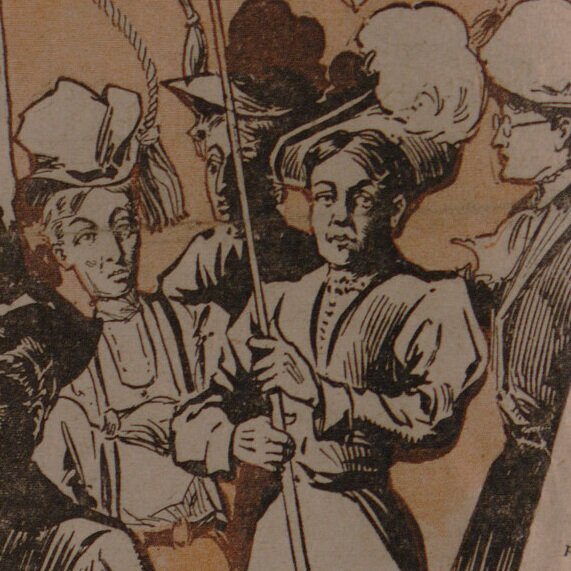
Lucinda “Lucie” Fulton Isaacs
Lucie Fulton Isaacs was born in Missouri in 1842. Her family traveled west to the Willamette Valley by wagon train in 1846. She settled in Walla Walla in 1864 with her husband Henry and their five children. She was a patron of the arts and helped found the Walla Walla Woman's Club in 1886. Joined by two of her daughters, Bessie and Grace, she was instrumental in changing the focus of the Woman's Club to the fight for suffrage. This group would become a local chapter of the Equal Suffrage League, and Lucie invited Susan B. Anthony to stay in their home during her tour of Walla Walla in 1871. She acted as the group's representative in Olympia during the 1889 Constitutional Convention. Later she would disseminate petitions and coordinate letter-writing efforts championing women's suffrage. She was also active in groups that worked for civic improvement, including the Women's Park Club, Art Club, and Reading Club. The Wenatchee Daily World reported in July 1910 that Lucie "and club rented the curtain of their largest theatre, the Keylor Grand, and had painted on it … the Lincoln poster [that] read: 'Seventy years ago Abraham Lincoln said: 'I go for all sharing the privileges of government who assist in bearings its [b]urdens, by no means excluding women.'" This was part of a large push for awareness of the suffrage amendment on the upcoming November ballot. Lucie long kept up correspondence with Emma Smith DeVoe of the Washington Equal Suffrage Association about elections and other happenings in Walla Walla. After the death of her daughter Bessie in 1911, she wrote to her friend that she was feeling tired in body and mind, but "the chapter needed me-so several of the members said-and I am sure that I need something to take me out of myself." She passed away in Walla Walla at age 75, four years before the Nineteenth Amendment would be passed.
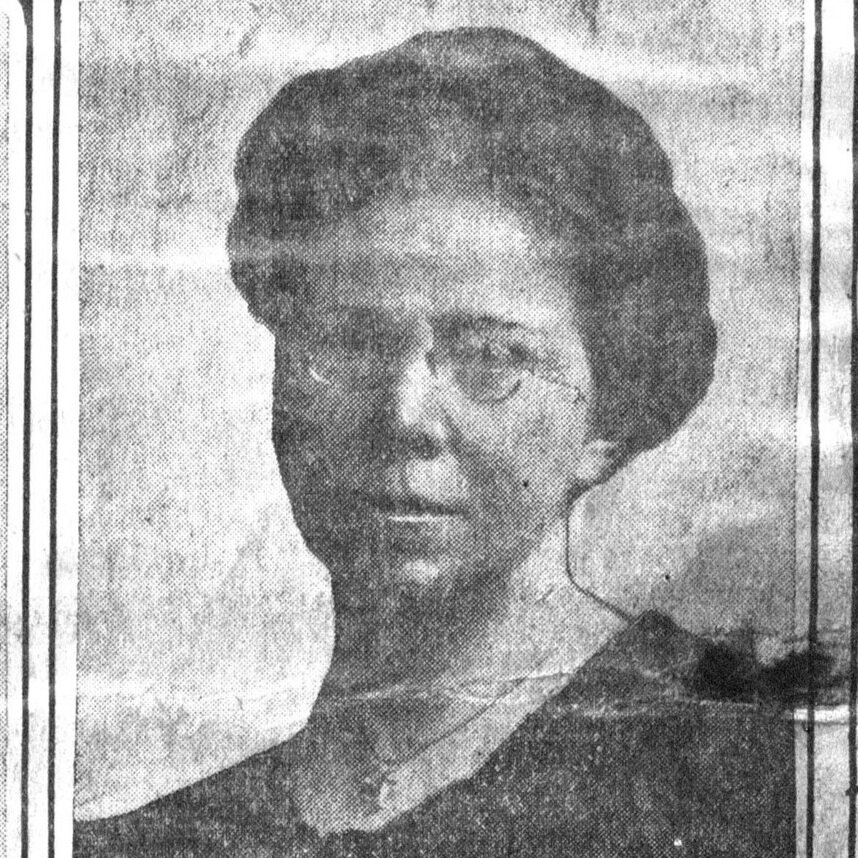
Elizabeth “Bessie” Isaacs Savage
Bessie Isaacs Savage was born in Indiana in 1862 to Henry P. and Lucie Fulton Isaacs. In 1864 the family settled in Walla Walla. Eventually, Bessie would have five siblings, including younger sister and fellow suffragist Grace. She married lawyer George Marvin Savage in 1890, and they had two children. A graduate of Whitman College and Mills College, Bessie was intelligent, well-educated, involved in social clubs that promoted civic improvement, and an eloquent speaker. She was not afraid of publically challenging the system by attempting to register to vote and calling upon women to cast ballots. In June 1895, Bessie applied to the City Clerk to register as a voter. Graham refused on the ground that as a woman she was not lawfully entitled to the ballot. She took the case to the Washington Supreme Court. In her challenge to the state, she claimed the right to register as a legal voter; however, no appeal bond was given or filed. Her obituary described her as "one of the longest time and most prominent of women club members, belonging to several different organizations, and being officer a number of times." She was heavily involved with The American Woman Suffrage Association, the Washington Equal Suffrage Association, the Woman's Century Club of Seattle, and philanthropic clubs such as Unity Club and P.E.O Sisterhood. In addition to her work for woman's suffrage, Bessie also used her fundraising skills to raise money for buildings for a new girls' home and training center in Seattle. In 1910, as vice-president of the Equal Suffrage Association, Bessie traveled around eastern Washington visiting women's clubs to educate the public about and garner support for the suffrage amendment to the state constitution in November. Bessie would live just long enough to see women's suffrage pass in Washington State. She died suddenly of heart failure while attending a Century Club meeting in Seattle at the age of 49 or 50.
Image courtesy of PRIMARILY WASHINGTON
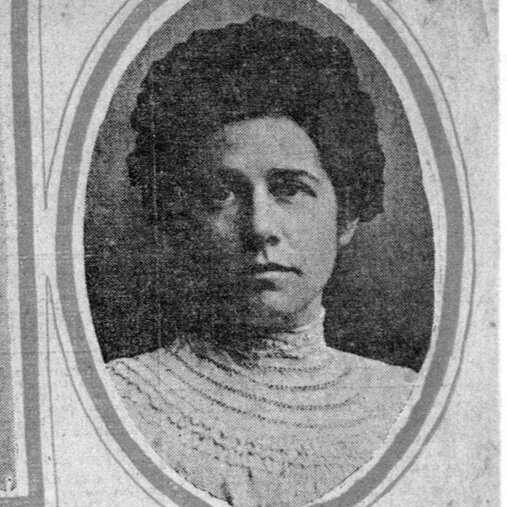
Grace Isaacs
Grace Isaacs was born in Walla Walla around 1864. In 1910 the Leavenworth Echo described her as “one of the best known club women of Walla Walla,” which is an adequate yet incomplete description of Miss Isaacs. Grace was dedicated to so many clubs and causes, hosting luncheons, dinners, and fundraisers for their benefit. She sat on numerous committees and made connections outside of Walla Walla, hosting visitors she invited to give talks and share information. She even helped coordinate a town clean-up campaign and raised awareness of the conditions faced by the poor. So much of Walla Walla today is owed to Grace’s tireless support and activism, including the Humane Society, library, Red Cross, and public schools. Grace was well-educated, a world traveler, and was interested in many aspects of history, art, and music. She was a member of the Walla Walla Art Club, which provided art courses and education and championed civic improvements. She studied voice at Whitman’s Conservatory of Music in 1905. As a member of the Women’s Reading Club, she participated in discussions about various topics of history as while helping raise funds to procure books for the public library. She actively engaged in arts and education, presenting a paper to the Symphony Club titled “The Development of the Opera” in 1907 and winning a bronze medal for one of her oil paintings in 1909. She also organized the Women's Park Club of Walla Walla, which helped secure funds and lands for parks, including City Park, now our very prominent and well-loved Pioneer Park.
Through all of her club endeavors, her goals were to better herself and improve all aspects of life in Walla Walla. Unsurprisingly she was the first woman to register to vote in Walla Walla County. As an active member of the state, local, and national suffrage movements, she was ready at the first opportunity to do her civic duty. She passed away in Seattle in 1936.
Image courtesy of PRIMARILY WASHINGTON
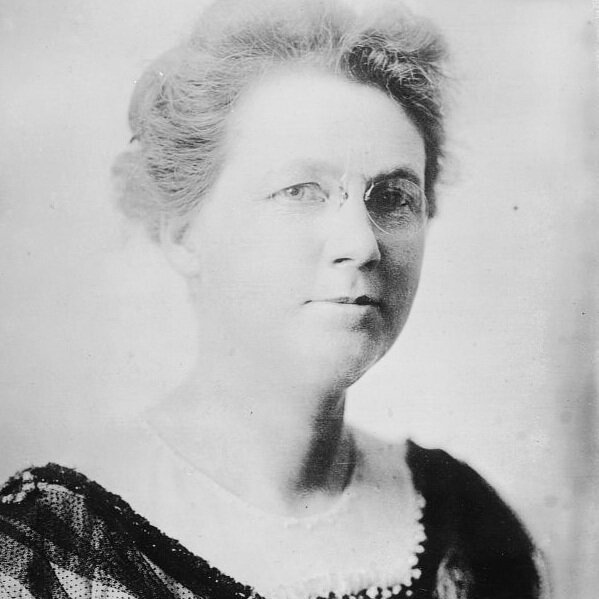
Josephine Corliss Preston
Josephine Corliss Preston was born in Fergus Falls, Minnesota, in 1873. She completed her high school education by age 16 and began teaching in a rural school soon after. Her father died in the fall of 1889, prompting her mother and two siblings to relocate to Pendleton, Oregon. Josephine was enrolled at Carleton's College Academy in Northfield, Minnesota, and remained to finish her first year. To be closer to her mother, she took a teaching position in Waitsburg in 1891. There she met and married Herbert P. Preston. In 1897 the couple moved to Walla Walla, and Josephine took a teaching position at Baker School. They divorced in 1899, and Josephine continued on her path in education and politics. She was appointed deputy county superintendent of schools by the Walla Walla County Commissioners in 1904. She was active in public life and a member and officer of several clubs, including the Order of the Eastern Star, the Women's Christian Temperance Union, the Walla Walla Art Club, and Women's Educational Club. She also continued her education at Whitman College, taking classes in education and philosophy. In 1908 she declared her candidacy for county school superintendent and won the election with the support of male voters, as women were unable to vote at this time. That year Tacoma suffragist Emma Smith DeVoe spoke at Whitman College, which prompted Josephine to join the ranks of local suffragists. In 1909 she attended the National American Woman Suffrage Association Convention in Seattle. The next year she traveled to the convention of the National Federation of Women's' clubs, enlisted in the National Council of Women Voters, and was successfully elected as county superintendent for a second term. She also became the first female advisory council member of the politics club of Whitman College, which included former territorial governor Miles C. Moore. She would receive an honorary master's degree from the institution in 1914. After women won the right to vote in Washington, she was elected State Superintendent of Public Instruction and took office in Olympia in 1913. She would hold that position for 16 years. During the push to ratify the Nineteenth Amendment in 1920, Josephine became friends with then National American Woman Suffrage Association president and fellow educator Carrie Chapman Catt. In 1919 they both petitioned Washington Governor Hart to call a special session of the legislature to ratify the amendment, then rallied suffragists to garner support among lawmakers to pass the measure. The measure passed, as did Preston's school relief package, a separate item on the agenda. A 1924 campaign brochure listed her achievements as increasing state support for common schools, increasing the salaries of and qualifications for teachers, increasing elementary and high school enrollments, increasing the annual number of high school graduates, establishing vocational education, and improving living conditions of rural school teachers by supplying them with cottages. It also states her emphasis on "the human side of education," focusing on the welfare of children and revitalizing rural school curriculums, was the key to her success. Josephine Corliss Preston died on December 10, 1958, at the age of 85.
Image courtesy of Library of Congress